
Our Learning Design Approach

About

At Kitso Learning Solutions, we believe learning experiences should do more than deliver information. They should create space for reflection, dialogue, experimentation, and real-world application.

Our work is grounded in a structured yet flexible learning design methodology that integrates adult learning theory, experiential learning, and systems thinking. This approach allows organizations to move beyond traditional training models and toward learning experiences that support meaningful behavioral change and long-term impact.

The Kitso Learning Design Framework was developed through years of experience designing leadership and learning programs across nonprofit, public sector, and international development contexts. The framework guides the full lifecycle of learning design, from understanding organizational needs to evaluating real-world outcomes.
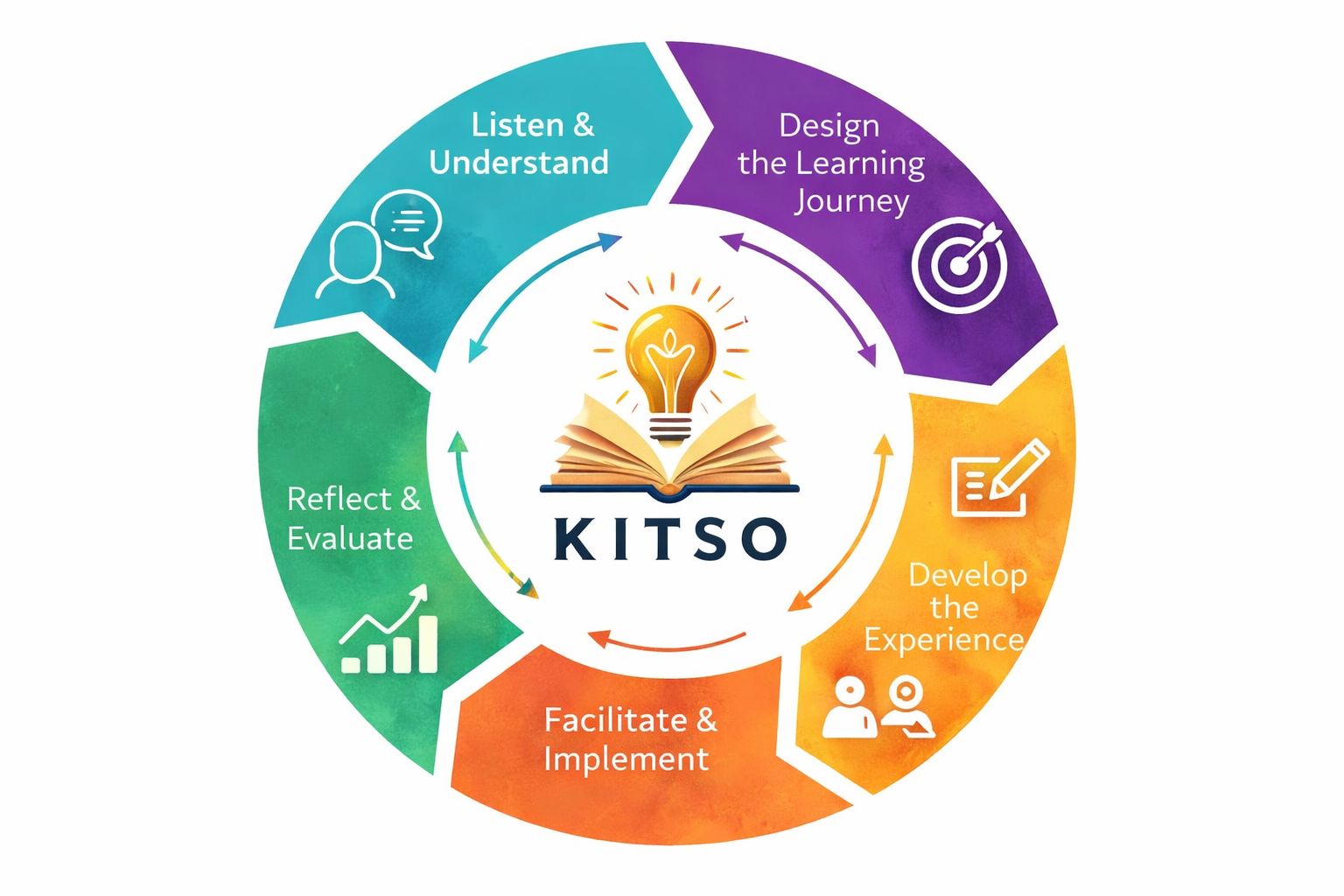
While every engagement is unique, our learning design framework ensures that each program is grounded in evidence-based learning science and tailored to the specific needs of the organizations and communities we serve.

Our approach draws on well-established learning science, including:

  • Geometric drawing of an outline square with sections divided by vertical, horizontal, and diagonal lines.

    Designing for How Adults Learn

    We design learning experiences that recognize the knowledge, experience, and motivations adult learners bring. Programs are built to connect directly to real work and practical application.

  • Geometric drawing of an outline square with sections divided by vertical, horizontal, and half circle lines.

    Learning Through Experience

    Participants learn best by doing. Our programs incorporate reflection, dialogue, and real-world problem solving to help learners move from insight to action.

  • Geometric drawing of an outline square with sections divided by vertical, horizontal, and diagonal lines.

    Blended Learning Journeys

    We combine facilitated workshops, digital tools, and applied practice to create learning journeys that support sustained growth over time.

  • Geometric drawing of an outline square with sections divided by vertical, horizontal, and circle lines.

    Measuring Learning and Impact

    Evaluation is built into the learning process to understand how participants apply new ideas and how learning contributes to organizational outcomes.

Download the Framework

This Framework outlines the full methodology used to design learning programs, including needs analysis, learning objective development, instructional activity design, blended learning architecture, and evaluation strategies.

Learning is not a one-time event. It is a cycle of reflection, practice, and growth.